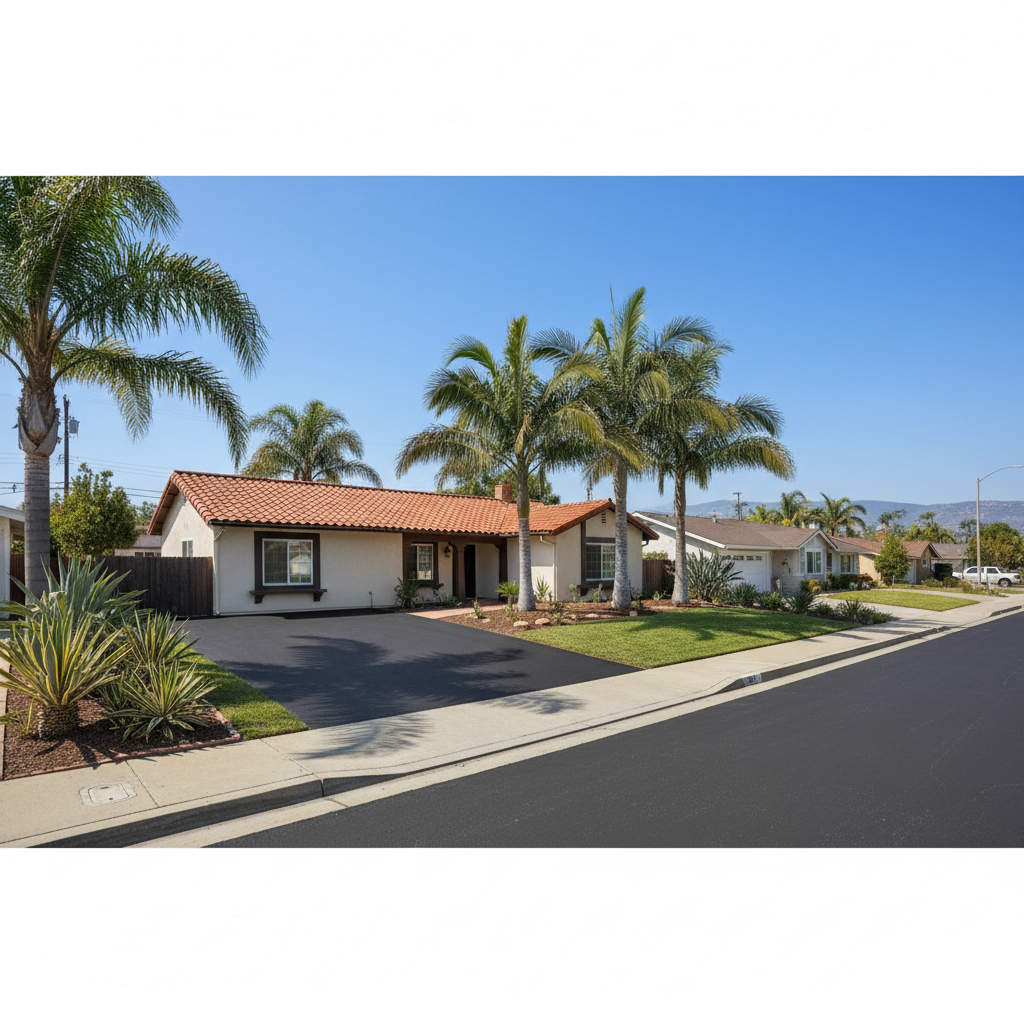
Driveways around Garden Grove look solid for decades while others start crumbling after just a few years. Quantum Asphalt Solutions sees this all the time driving through neighborhoods near Brookhurst or Harbor. Ugly alligator cracks and sinking edges appear, and homeowners assume the contractor used cheap materials. Usually, that is not the case at all. It comes down to understanding how local conditions interact with fresh asphalt.
Quantum Asphalt Solutions deals with specific challenges right here in North Orange County. While we do not get freezing winter snowplows tearing up the surface, our soil is a whole different beast. Much of the local ground has high clay content that expands when we get heavy winter downpours and shrinks right back down when the dry summer heat kicks in. That constant shifting puts brutal stress on a rigid sub-base. If your base was not graded and compacted properly to handle that movement, your brand-new asphalt surface is going to crack no matter how thick the layer is.
The Real Cost of Ignoring Drainage
Water is asphalt's worst enemy. People forget that because it rarely rains here, but when it does, it pours. Garden Grove is pretty flat, which means runoff does not always drain away from your property the way you would hope. If your asphalt driveway has a slight reverse slope toward your garage or sits lower than the sidewalk, water pools on the surface. That moisture seeps into tiny microscopic cracks, softens the sub-base underneath, and suddenly you are looking at a pothole where your parking space used to be.
At Quantum Asphalt Solutions, our team spends a lot of time looking at drainage patterns before we ever lay a single ton of mix. Grading matters just as much as the paving itself. If you skip proper slope management to save a few bucks upfront, you will pay for it later in premature Asphalt Repair.
Choosing the Right Thickness for Residential Traffic
Not all driveways need to handle the same weight. If you live in an older mid-century pocket of the city where cars parked on the apron are a tight squeeze, or if you have got delivery trucks and RVs rolling over your property regularly, standard thin paving is not going to cut it. Residential driveways typically need a solid compacted aggregate base of at least four to six inches, topped with a minimum of two to three inches of hot-mix asphalt after compaction.
Cut corners on asphalt thickness and you will see rutting right where your tires sit. Fixing that means tearing it all out and starting over, which takes a lot of time and effort.
If your asphalt driveway is starting to look tired or you are planning a complete Asphalt Installation overhaul this season, give Quantum Asphalt Solutions a call. We will come out, take a look at your specific sub-grade, and give you a straight answer on what it takes to build an Asphalt Paving project that lasts in Garden Grove, California.