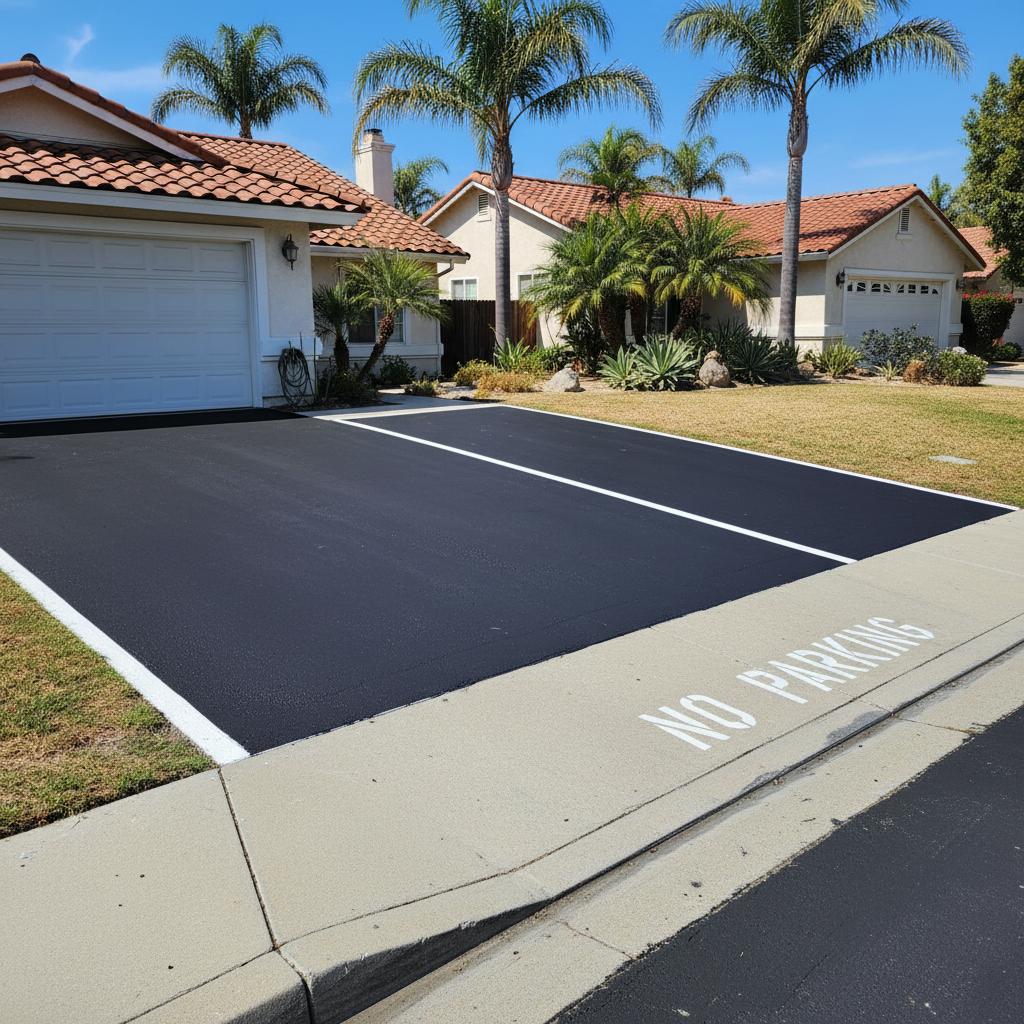
Thinking about getting your parking lot restriped? It's more than just slapping some paint down; there's a real art and science to it, and the cost can swing pretty wildly. You definitely want it done right, especially if you run a business where clear, safe parking is a must-have. So, let's chat about what you might expect to pay right here in Garden Grove.
What Drives Striping Costs?
A few big things make the price go up or down. It's not just a flat rate per parking stall, even though that's often how we break it down for our customers.
- The Size of the Job: This is probably the biggest factor. A small lot with, say, 10-20 stalls will obviously cost less than a huge shopping center lot that needs hundreds. More linear feet of striping means more paint and more labor, plain and simple.
- Layout Complexity: Simple straight lines for parking stalls are one thing. But what if you've got a bunch of custom stenciling? Think arrows, 'Visitor' spots, 'No Parking' zones, handicap symbols, fire lanes, or even EV charging spots — that all adds time and material. Handicap symbols, for example, are pretty detailed and take longer than a basic line.
- Existing Conditions: Is the lot brand new asphalt, never been striped before? Or are we re-striping over old, faded lines? If the old lines are barely there, that's usually easier. But if there's a mess of old, incorrect lines that need to be blacked out first, that's extra work and material. Sometimes, if the asphalt is really old and crumbling, the paint won't stick as well, which can definitely complicate things.
- Type of Paint: Most jobs use traffic-grade acrylic latex paint. For higher durability or specific uses, though, you might want to consider thermoplastic. It's more expensive but lasts way longer. For most commercial lots around here, especially with our sunny weather, good quality acrylic usually does the trick.
- Prep Work: Before we even touch a paint sprayer, the lot needs to be clean and dry. If there's a lot of debris, dirt, or standing water, we'll have to clear that away first.
- Time of Day/Week: Sometimes businesses need striping done after hours or on weekends to avoid disrupting their customers. That can mean overtime rates for the crew, which bumps up the cost.
Typical Cost Ranges You'll See
Alright, let's get into some actual numbers. Don't take these as gospel, but they're pretty realistic for Garden Grove and the surrounding areas.
- Standard Parking Stalls: For basic 9-foot wide parking stalls, you're usually looking at anywhere from $8 to $15 per stall. This price includes both lines for the stall. If you have a larger lot (say, 50+ stalls), the per-stall price might come down a bit because of the efficiency of doing more at once.
- Handicap Symbols: These are more detailed and often need specific blue paint. Expect to pay $75 to $150 per symbol, depending on its size and how complex it is.
- Arrows & Stencils: Directional arrows, 'STOP' stencils, or custom lettering typically run between $40 and $100 each.
- Curb Painting: Fire lanes or no-parking zones on curbs are usually priced per linear foot, often around $1.50 to $3.00 per linear foot.
- Blackout Work: If we need to cover up old lines, budget an extra $0.50 to $1.00 per linear foot of line that needs blacking out.
So, for a small business lot with, let's say, 20 standard stalls, 2 handicap spots, and a couple of arrows, you might be looking at a total bill of $350 to $700. A larger lot, like a strip mall with 100 stalls, 5 handicap spots, and a dozen arrows, could be anywhere from $1,200 to $2,500. Remember, these are just estimates, of course.
What Should Be in Your Quote?
When you get a quote from Quantum Asphalt Solutions or any other contractor, make sure it's super clear. It should spell out:
- The number of parking stalls they'll be striping.
- The number and type of stencils (handicap, arrows, 'STOP', etc.).
- Any curb painting linear footage.
- Any blackout work that's needed.
- The type of paint they'll be using.
- A timeline for when they expect to finish.
- Any necessary prep work (like cleaning or sweeping).
- Their insurance and licensing information.
A good quote won't just give you one big number; it'll break down all the components so you can see exactly what you're paying for. Nobody likes surprises, right?
How to Avoid Overpaying
Here's my two cents:
- Get Multiple Bids: This is a no-brainer. Always get at least three quotes. It really helps you understand the market rate and what different contractors are offering.
- Check References & Reviews: Don't just go with the cheapest option. Look for contractors with a solid reputation. A bad striping job fades fast or looks sloppy, and that definitely reflects on your business.
- Be Specific: When you ask for a quote, be as detailed as possible about what you need. Provide a diagram if you have one, or even better, walk the lot with the contractor. The clearer you are, the more accurate the quote will be.
- Understand the Paint: Ask what kind of paint they're using. If someone's quote is drastically lower than others, they might be using cheaper, less durable paint that won't last.
- Ask About Warranties: A reputable company should stand by their work, at least for a reasonable period.
Striping isn't just about making things look nice; it's about safety and following the rules. You want clear, crisp lines that guide traffic and make your property look professional. Do your homework, get clear quotes, and you'll get a great job without emptying your wallet.